2022

November 2022
The last Speaker Meeting of the year took place on 3rd November, when author Philip Caine entertained us with a whistle-stop tour of his extraordinary career. In 45 minutes of vivid description, colourful characters and fascinating anecdotes we heard of Philip’s extraordinary adventures and exploits in the North Sea, Algeria, West Africa, Kazakhstan, Russia, Iraq and finally Dubai. Philip retired in 2015 and is now pursuing as second career as a writer and speaker.
October 2022
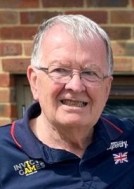
On Thursday 6th October we enjoyed a moving and inspirational talk by u3a member Mike McKenna and ex-serviceman Tom O’Brian. After a difficult childhood blighted by ill health, Mike trained as an athlete and competed successfully at a high level. He then went on to teach discus and shot put and joined Preston Harriers as a coach, where he began training injured ex-servicemen to take part in the newly inaugurated Invictus Games.
Tom was one such veteran. Having joined up at 17, he served with the Scots Guards in London before being posted to various locations around the world including Afghanistan in 2010, where he acted as an interpreter in addition to active service. Having sustained significant injuries during heavy fighting, he left the Army in 2012, but over the next 4 years struggled with mental and physical injuries which brought him to a very low point in his life. Eventually, he heard from a friend about Combat Support and the Invictus Games, and decided to approach Preston Harriers, where he met Mike. This friendship, and the sport training, changed his life. He competed in the Warrior Games in the USA, met Prince Harry and took part in the Invictus Games.
This was a vividly described account of triumph over adversity and the power of friendship. Thank you, Mike and Tom, for sharing it with us.
September 2022
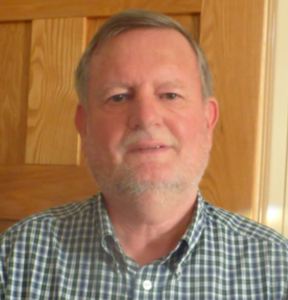
On Thursday 1st September a large audience gathered to hear Roger Blaxall speak about his interesting and exciting career as Public Relations Officer for Greater Manchester Police and also Lancashire Constabulary. In a very detailed and entertaining talk we heard about the Police Constable who stole cars to pay off his £58,000 gambling debt, the Police Sergeant who smuggled drugs to India whilst claiming to make monthly visits for specialist back treatment, and the Detective Sergeant whose strippergram party was covertly filmed and sent to the News of the World.
June 2022
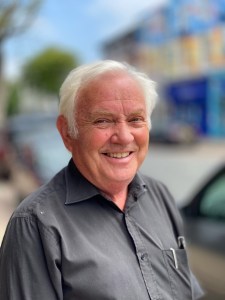
A large audience gathered on Thursday 9th June to hear David Hearn’s fascinating talk about Sir William Brown. One of linen merchant Alexander Brown’s four sons, William was born in Liverpool but moved with his family to Baltimore, then returned to Liverpool in 1810 and married his wife Sarah. They had 9 children, and William outlived all of them.
William’s extensive interests covered shipping, banking and railways, and by 1836 he was turning over £10 million a year. $1 in every $6 of US overseas trade was handled by William Brown’s companies. Several office buildings were built in Liverpool, including the library and museum we see today, and William Brown Street is the only street in Europe which consists entirely of public buildings. In spite of this William was not well liked and was rather an introvert, however he was well known for his philanthropy.
May 2022
The Lancashire Cotton Famine
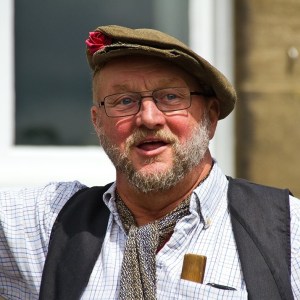
1860, and the Industrial Revolution is well under way, with 2000 cotton mills employing half a million people, using cotton mostly supplied from the cotton fields of the Southern States of America which arrives regularly in the port of Liverpool with its 7 miles of docks. Then in 1861 war breaks out in America. 800,000 lives will be lost and there are naval blockades of the Southern States. The supply of cotton comes to an end; nearly 50 mills close within a few months and in Wigan alone 10,000 workers are unemployed. With no other source of income or support they are reduced to begging and burning furniture for warmth.
Then in 1862 John Whittaker, aka Lancashire Lad, writes a letter to the paper about the plight of the workers and begins to receive donations. Other philanthropists follow suit, and before long towns are setting up their own Relief Committees. Sewing schools are set up to retrain young mill girls, and by 1865 the war has ended and the supply of cotton resumes.
This amazing tale of triumph over adversity was told by Sid Calderbank, a Lancashire Lad himself who for 25 years has been entertaining groups such as ours. Using songs, poems and extracts from contemporary diaries, Sid painted a vivid and evocative picture of these extraordinary times, and drew parallels with the present tragic situation in Ukraine. A spellbinding talk, thank you Sid!
April 2022
Fakes and Forgeries: is there a difference?
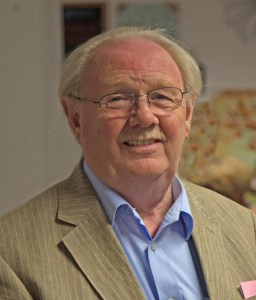
After a most informative, amusing and well-illustrated talk by Bill Soens, we were left in no doubt: a fake is not intended to deceive, whereas a forgery most definitely is.
Bill began by showing us a Georgian silver coffee pot, valued at several thousand pounds and complete with hallmarks. In fact this turned out to be fashioned from a silver chalice, to which a spout, handle and lid had been added and which now had two sets of genuine hallmarks about 150 years apart.
By contrast, we were then introduced to ‘The Bolton Mafia’, aka George and Olive Greenhalgh and their son Shaun. Working in his garden shed, Shaun forged paintings by Lowry, artefacts by Barbara Hepworth and Paul Gauguin and an Egyptian statuette which he sold to the Bolton museum for £440,000, after it had been authenticated by the British Museum and Christie’s Auction house experts. He also claimed that an alleged Leonardo painting, La Principessa, had been painted by him and was in fact the checkout girl from the local Coop. This is still in dispute. He was eventually prosecuted and spent 4 ½ years in jail. Apparently he is still painting but signs everything with his own name, and has returned his ill-gotten gains to the Bolton Museum.
March 2022
On Thursday 3rd March Julia Clayton made a welcome return, and gave a good size audience a fascinating insight into The Grand Tour. We heard how one of the first Grand Tours took place from 1613-14, when Thomas Howard, Earl of Arundel, and his wife Alathea journied to Italy, accompanied by the artist Inigo Jones. Amongst many other works of art they purchased 37 paintings by Titian, which can all be seen in the Ashmolean museum in Oxford. Many others followed in their footsteps, renting a carriage in Calais and travelling onward in the hope of improving their language skills, building on their classical education, viewing artworks (and often having portraits painted of themselves), and listening to new music. This would build up their prestige and confirm them as men and women of taste. Clothes would be bought in Paris, and lists of what to take included such suggestions as a sofa bed, cutlery, condiments, cork-soled shoes and ‘portable soup’.
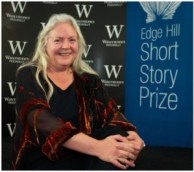
Julia then introduced us to 3 Lancashire gentlemen who made the Grand Tour: Charles Townley of Burnley, whose sculpture gallery formed the basis of the British Museum collection; Henry Blundell of Ince Blundell, a landowner whose collection of sculptures can be seen in Liverpool Museum; and finally John Foster Junior, a young architect. After spending 7 years abroad John Foster became the chief architect for Liverpool and designed the ‘bombed out church’ we are all familiar with, and many other buildings.
With the advent of the railways, improved techniques for reproduction and mass market guide books, the Grand Tour fell out of favour, but its legacy remains for us to enjoy today. Thank you Julia for a most interesting and enjoyable talk.
Julia will be back next year – keep an eye open for details.
February 2022
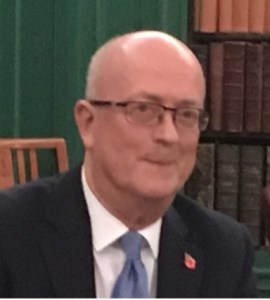
Neil Stevenson
The first of our 2022 Speaker Meetings took place via Zoom on Thursday 3rd February, when Neil Stevenson gave a fascinating illustrated talk entitled From Pit Graves to Pyramids: Ancient Egyptian Burial Practices. We heard of evidence from 3500 BC in the form of Gebelein Man, who was simply buried in sand surrounded by grave goods, and whose body can be seen in the British Museum. In later times large structures were built over graves, then further developments led to step pyramids being constructed out of mud bricks. Finally techniques were perfected and the famous Pyramids at Giza were constructed using locally quarried limestone and granite from Aswan, using various transportation methods including sleds, levers and ramps. Neil also gave us an insight into hieroglyphics, the sophisticated writing system developed by the Egyptians 4500 years ago.
A lively Q & A session followed Neil’s talk.