Starting a compost heap is a cost-effective way to recycle organic waste and provide soil and nutrients for your plants.
I’ve been composting for many years and now have a collection of 4 compost bins. Two are bought brown ones and the other two are of the black dalek variety provided by the Council.
The two black ones and one brown are currently part what I call my Grandfather, Father, Son system of composting.
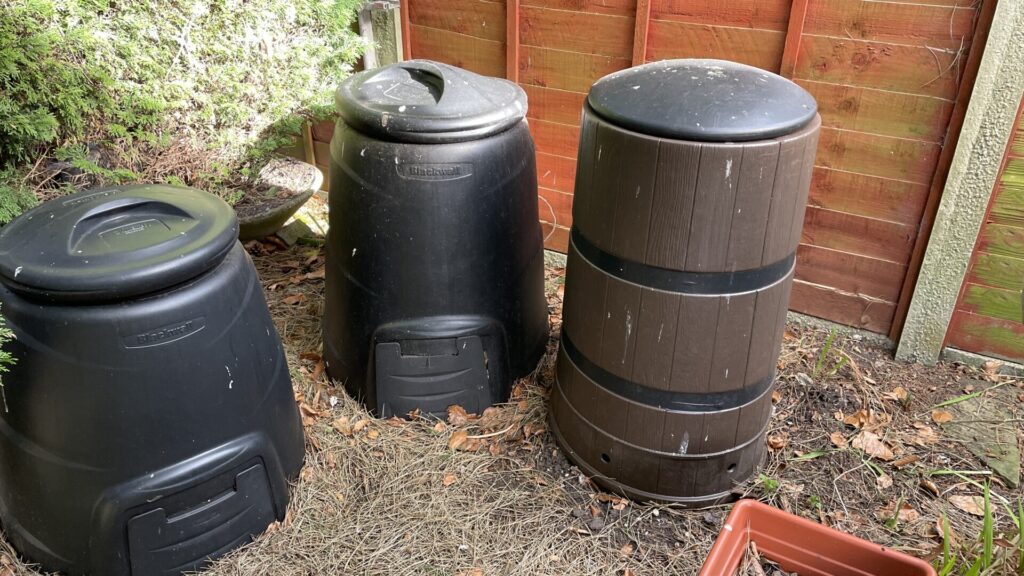
- Bin 1 - already composted and available for use (Grandfather)
- Bin 2 - left alone, busy composting away (Father)
- Bin 3 - available to receive compostable materials (Son)
Bin 4 is not directly part of this system, but is useful for storing excess Autumn leaves for later use.
It takes about a year for a Bin 2 to compost sufficiently to become a Bin 1. And, simultaneously, about a year for a Bin 3 to fill up sufficiently to become a Bin 2. It is sometimes less which causes my system to get a wee bit out of sync. As when Bin 1 is used up too quickly before Bin 2 is ready. But amazingly the system usually works out pretty well time-wise!
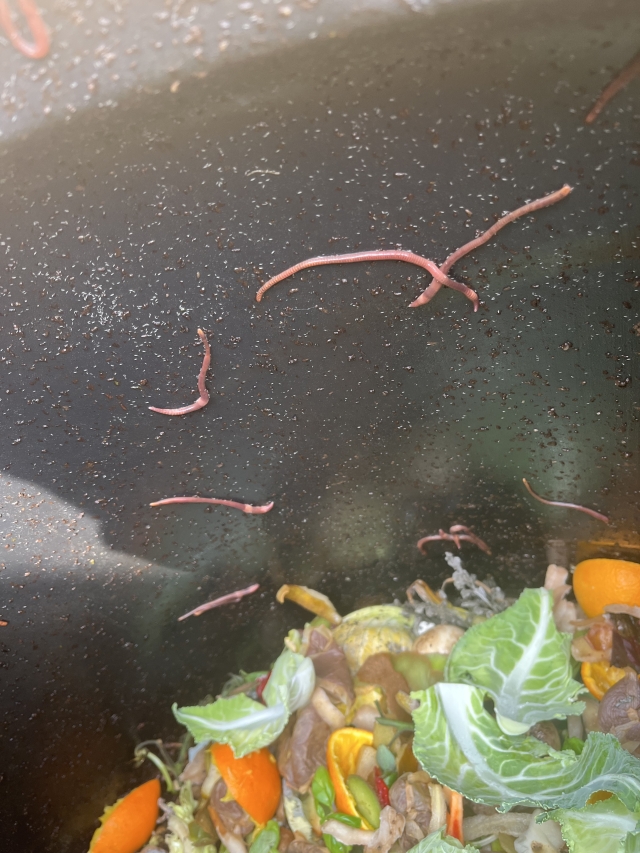
You know Bin 2 is ready to become Bin 1 when the worms and slugs disappear.
I guess they have chomped anything worth chomping. The contents also look, smell and feel like “compost” and ready for use. (I mostly use the results as mulch for the borders and for outdoor, but not indoor, potting.)
The empty Bin 1 is then cleaned and made ready to become the new Bin 3. And so the composting cycle goes on.
Here are a few advantages to composting.
- Doing your little bit to help save planet resources by directly and locally returning compostable items into the ecosystem.
- Recycling of items that would otherwise go into your council bins, eventually adding to their costs (and our council tax!).
- Saving you some money and effort in buying and transporting commercial compost.
- You know the source of your own compost and that it is definitely peat-free.
The main items that go into my Bin 3 are:
- Grass Mowings and Fallen Leaves
- Cardboard
- Paper (Shredded is particularly good. If you have no shredder, u3a members have access to one.)
- Fruit and Veg Peelings
- Used Teabags (Watch out – some posh teabags are non-biodegradable)
- Coffee Grounds (If none of your own, then some outlets will give you used grounds eg Waitrose in Formby and Booths in Burscough. But you need to take along a receptacle and scoop.)
- (Raw) Egg Shells
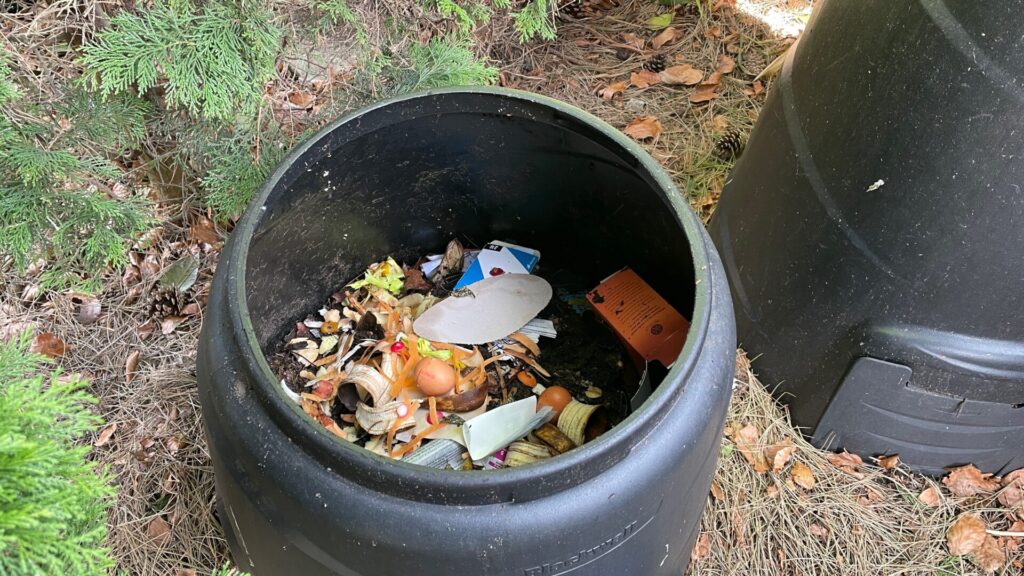
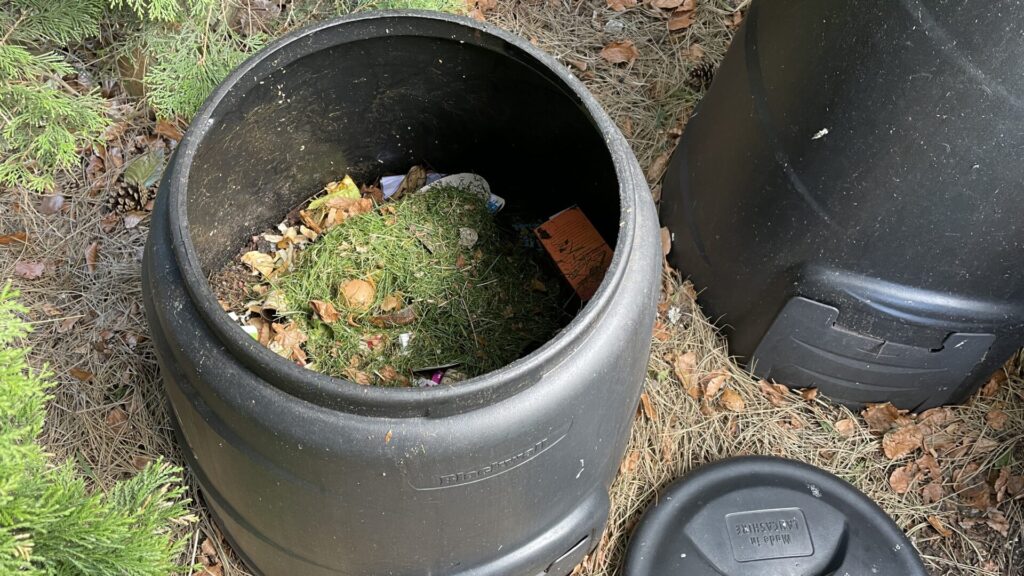
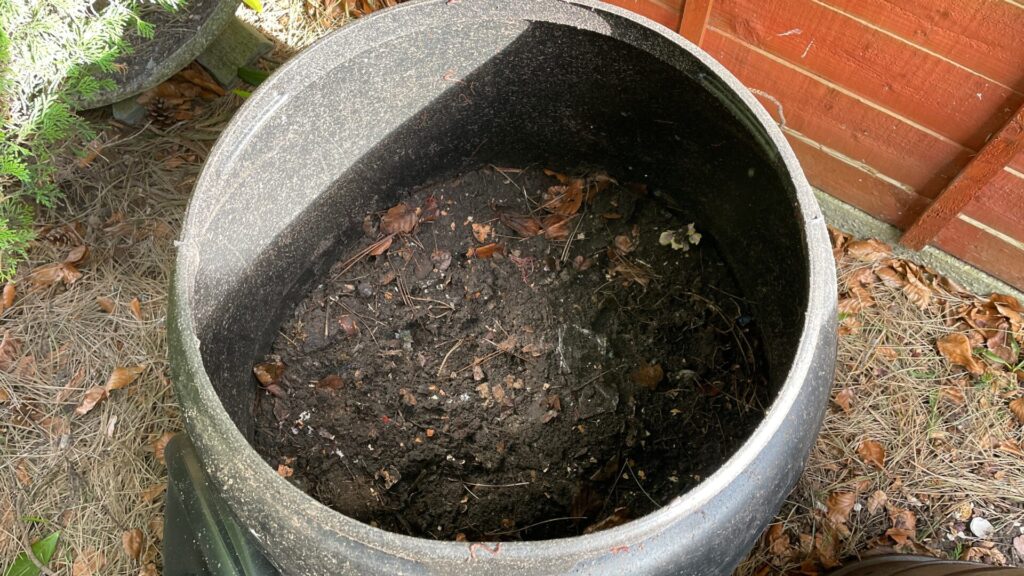
I don’t add weeds or seeds or diseased or mouldy plants. Cooked food items are a no-no (might attract vermin). And I avoid big wodges of grass mowings (goes slimey) or thick layers of leaves (forms a slow-to-compost mat).
The contents in Bins 2 and 3 should not smell bad, just maybe a bit ‘musty’. If they do, something wrong has been added such as cat litter or cooked food scraps. Or it may be that your mix of materials is off-kilter. (Check out “Brown” and “Green” materials for composting on the internet. There will be explanations there too about the nutrients each provide.)
My Bins are located on an earth base. A bin placed on a concrete slab in a relative’s garden soon leaked a very unsavoury dark liquid and failed to compost adequately.
It is good if you have a bin location out-of-sight from your home and those of your neighbours. Fortunately mine are hidden by hedging and outhouses in such an appropriate location that I suspect my gardening predecessor set it up there decades ago.
The only disadvantage of being so hidden in this sort of position is that sunshine and warmth can be limited at certain times of year. But there are products you can buy from the garden centre that speed up decomposition of plant matter. I now use them warily. During a senior moment, I once liberally spread a large quantity all round my largest and favourite hosta thinking I was holding the box of slug and snail repellent!
One is meant to regularly turn over compost. But this is problematic in a bin system, so I don’t bother. But I do ensure that Bin 2 keeps on the boil by adding thin layers of varied so-called “brown” and “green” waste and making sure it does not get too wet or dry. I add water from the rain butt but excess (milk-free) liquids from tea and coffee pots are OK too.
I’ve not yet experienced a problem with smell or vermin. But composting is not without risks. One summer, I noticed bees flying in and out through the bottom entrance hatch of Bin 3. Opening the top lid revealed a small hive. The solution adopted was to leave the lid on for the rest of that year. It composted as usual and when ready, the hive had gone, presumably having served its purpose for the bee colony. A less happy situation occurred when a single wasp got trapped in a Bin 3 and whizzed out and stung me next time the lid was opened. I stand well back now during wasp season. But the worst accident was when manipulating a Bin 1 to reveal the ready compost pile for use. It gave way suddenly with me flying backwards narrowly avoiding both bin and compost landing on top of me.
There can, however, be more serious dangers to be avoided and we may be further at risk as we get older or have certain health conditions. We can be exposed to breathing in tiny bits of mould found in the garden including soil, compost and rotting leaves. I try to avoid this by the usual glove wearing and hand washing when gardening but also have started to wear a mask when handling compost at close quarters and for any length of time.
Such concerns, however, do not take away that sense of achievement when using your own compost, produced in your own garden as if by magic!
And finally a Caveat, a Disclaimer and a Plea!!! The above story is mainly based on my own experiences. I researched the topic years ago when starting out but not checked up much in recent times. So the information is this story is limited and may be flawed and out-dated. But there is plenty of good stuff on the Internet to investigate for yourself and help you start up your own composting system. Or you may have been composting for many years and have your own well-tried methods. So whether a composting newbie or an old-hand, it would be really great if you could send your own composting experiences, hints, tips or advice to the Magazine Editor to be published in the next u3a Magazine and / or on the A&O u3a website (Web Team).